India-focused engineering for resilient critical power, precision cooling, fire protection, controls and coordinated BIM, delivered from Hyderabad for mission-critical and high-density computing environments.
INTEGRATED MEP DESIGNConnected power, cooling and life safetyDATA HALLSEnvironmental control around the IT loadCRITICAL POWERResilience from utility to rackPRECISION COOLINGThermal performance engineered end to endSCALABLE INFRASTRUCTURECapacity planned for phased growth
SECTOR UNDERSTANDING
Engineering Around Availability, Operations and Change
From its Hyderabad delivery base, JEC supports data centre projects across India with design development, multidisciplinary MEP engineering and BIM production. Selected Qatar, UAE, GCC and global assignments are undertaken directly within an agreed appointment or as confidential support to an international lead consultant. Our work is shaped around IT load, availability objectives, maintainability, failure response, energy performance and clearly defined project requirements.
JEC can work directly for a client or as a confidential technical extension of an international lead consultant. The exact topology, redundancy objective, design responsibility and certification pathway are confirmed in the appointment before design begins.
DESIGN PRIORITIES
What Drives the Engineering
01
Availability & resilience
Power and cooling arrangements assessed around the agreed redundancy philosophy, maintenance strategy and credible failure events.
02
Thermal performance
Cooling loads, rack densities, airflow paths, operating envelopes and future deployment profiles inform the mechanical concept.
03
Maintainability
Equipment access, isolation, replacement routes and concurrent maintenance requirements are coordinated during design.
04
Digital coordination
Revit models, federated reviews and clash management align engineering systems with structure and architecture.
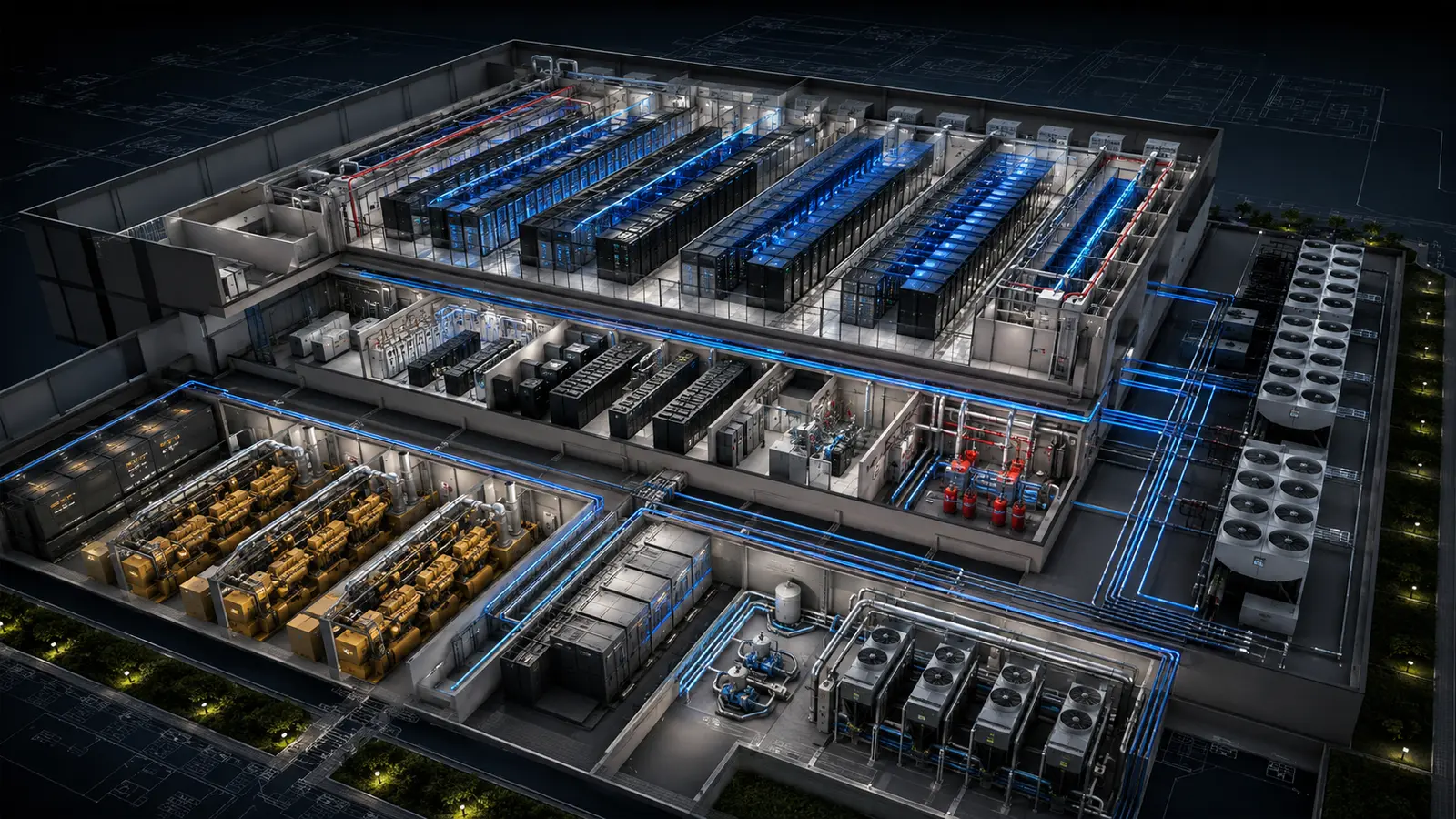
Original JEC technical illustration; representative rather than a confidential client model.
COORDINATED SYSTEMS
One Connected Mission-Critical Infrastructure
The technical design is developed as connected power, cooling, life-safety and monitoring chains. Interfaces are tested against the agreed IT load, rack-density plan, availability objective and operational sequences—not treated as isolated equipment selections.
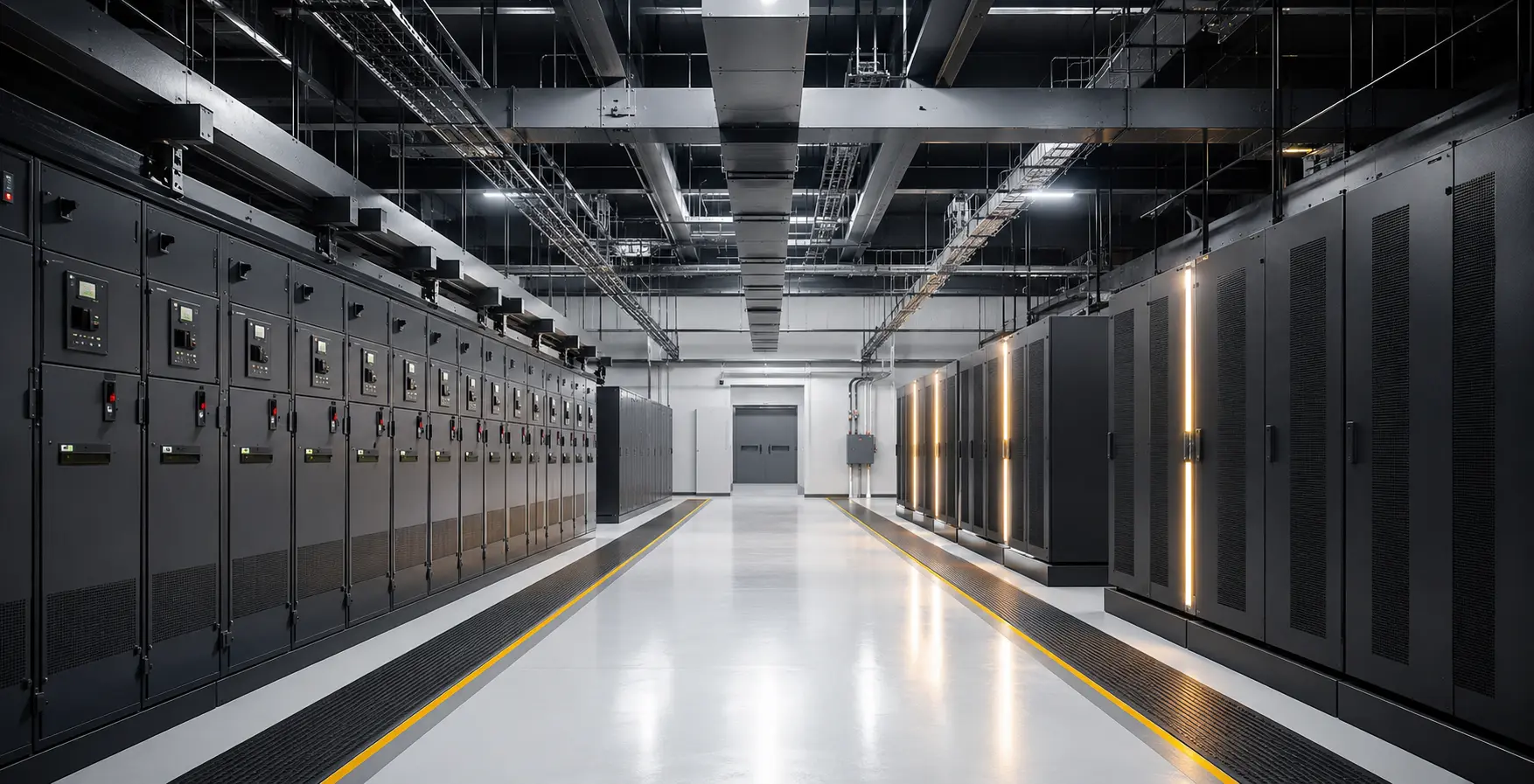
Utility intake, generator and UPS paths are developed around A/B distribution, selective coordination, earthing, battery safety, metering and the defined failure scenarios.
Thermal chain
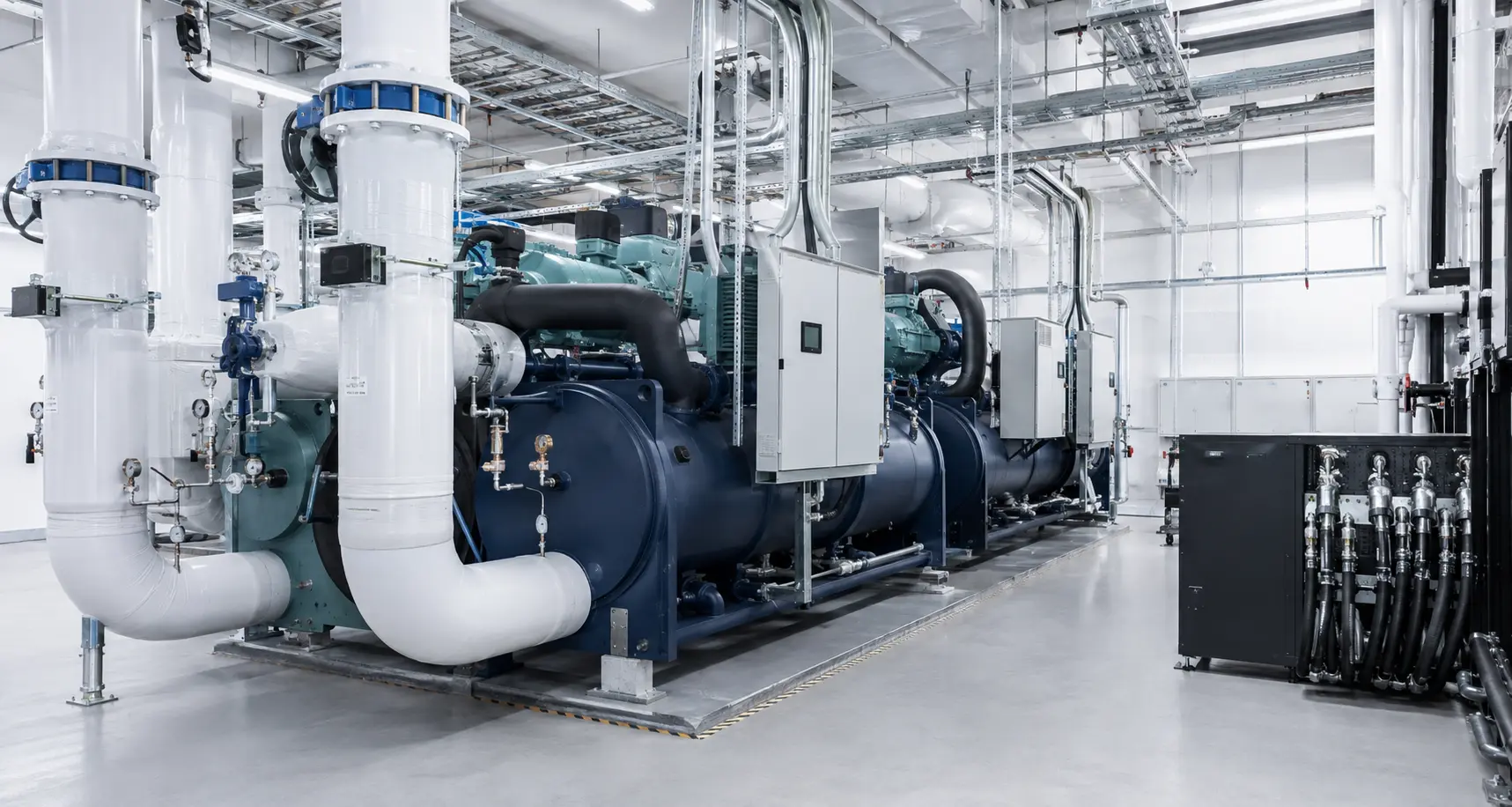
Rack loads, airflow management, chilled-water temperatures and heat rejection are coordinated with confirmed specialist or vendor interfaces as one thermal-performance strategy.
Operational safety
Fire detection and suppression, leak detection, emergency power-off philosophy, access and maintainability are integrated with the client’s operating procedures.
Digital validation
Federated BIM, clearance reviews, containment studies and coordinated plantroom/riser models reduce spatial risk before construction.
PROJECT OUTPUTS
From Design Criteria to Coordinated Information
Deliverables are aligned with the agreed stage, design responsibility, client requirements and the appointed lead-consultant or certification process.
01Basis of design and design criteria
02Load, capacity and system calculations
03Single-line diagrams, schematics and layouts
04Equipment schedules and technical specifications
05BIM models and coordination reports
06Tender, authority and construction-stage support
STANDARDS & CERTIFICATION PATHWAYS
Requirements Confirmed Project by Project
Applicable standards depend on the jurisdiction, client brief, availability objective and formally appointed certification body.
UPTIME
Uptime Institute Tier Standard
Topology and operational objectives can be incorporated when the client appoints Uptime Institute for the applicable certification pathway.
TIA-942
Telecommunications Infrastructure Standard
Data-centre telecommunications, architecture, electrical and mechanical infrastructure criteria where specified.
ISO 22237
Data Centre Facilities & Infrastructures
International framework for data-centre facility design, construction and operation where adopted.
ASHRAE
TC 9.9 & Standard 90.4
Thermal guidance, environmental envelopes and energy-performance requirements for data centres.
NFPA 75
IT Equipment Fire Protection
Fire-protection principles for information technology equipment and associated spaces where adopted.
Uptime Institute and the other names shown are trademarks or standards references of their respective owners. References indicate frameworks that may apply; they do not claim JEC accreditation, project certification or institutional endorsement.
DATA CENTRE DESIGN FAQs
Common Mission-Critical Questions
What information is needed to begin data centre MEP design?
The starting brief normally defines location, IT load, rack-density profile, growth plan, availability objective, utility constraints, phasing, environmental criteria, programme and the required design stage. JEC records assumptions where information is still developing.
Can JEC design to an Uptime Institute Tier objective?
JEC can develop the engineering around a defined Tier topology objective when it forms part of the client brief. Formal certification is a separate process undertaken with Uptime Institute under the client’s appointed pathway; the website does not claim certification or accreditation.
Can the MEP design coordinate high-density or liquid-cooling requirements?
Where the client appoints the required technology specialist or vendor, JEC can coordinate their confirmed heat loads and interface requirements with the supporting mechanical, electrical, hydraulic, controls and spatial design. This does not claim liquid-cooling technology selection as an in-house specialist service.
Can JEC assist an international data centre consultant as a subconsultant?
Yes. JEC can provide confidential design development, calculations, coordinated drawings and BIM/Revit production within the lead consultant’s agreed standards, reviews, communication protocol and design-responsibility matrix.
How does BIM reduce mission-critical coordination risk?
Federated models help teams review plant space, access, replacement routes, A/B segregation, service crossings, containment, risers, builder’s work and installation interfaces before coordinated documents are issued.
RELEVANT DESIGN EXPERTISE
Integrated Data Centre Design Expertise in India
JEC supports data centre planning, architecture, structures, MEP and BIM as connected workstreams. Scope, credentials, technology specialists and certification responsibilities are confirmed for every appointment.
Data centre architects India
Campus planning, data-hall and support-space layouts, security zoning, maintenance routes and engineering-space coordination.